
Multi-HTV appeal – Images Magazine Nov24 Edition!
Rosie Hill of Dae Ha UK demonstrates how to build a printed design using different types of HTV.
The creative possibilities of heat transfer vinyl (HTV) printing are endless due to the huge variety of special effects and colours on offer. All that’s needed is careful planning before making the first cut.
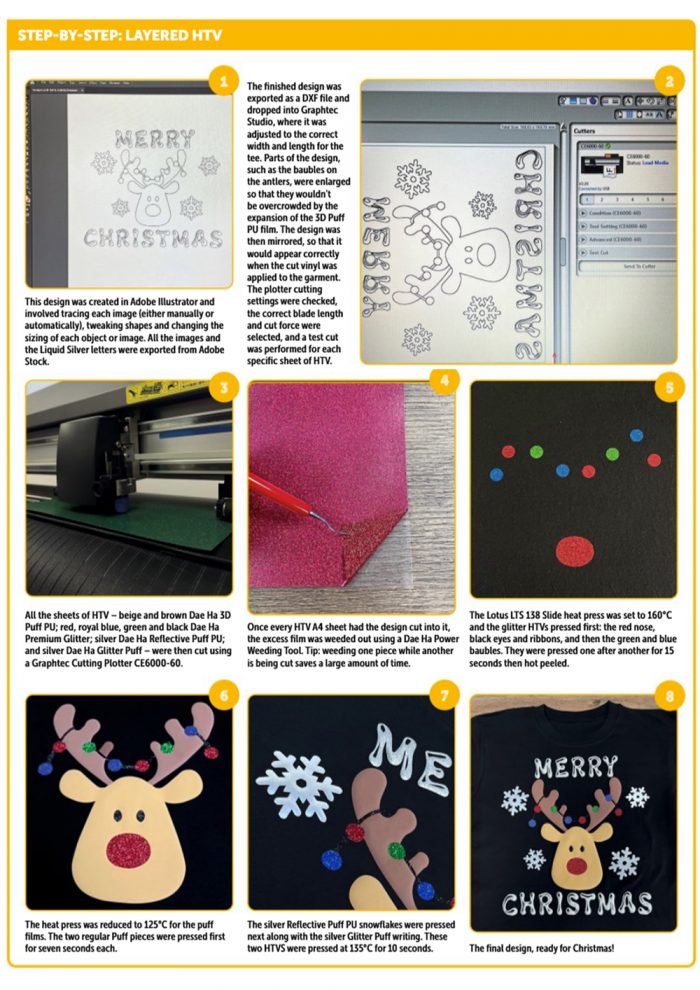
With this festive design, Rosie Hill, project assistant at HTV and DTF film supplier Dae Ha UK, ensured each of the eight HTVs she was using was laid down in the right order and in the ideal position to create the desired effect. “It is important to make sure there are no gaps in the design when you are using multiple types of HTVs in one piece,” she explains. “If there is a slight gap between the two it can throw the design off and it will not look as impressive”.
Rosie was using Dae Ha 3D Puff PU for some of the elements, and so she enlarged parts of the design, such as the baubles in the reindeer’s antlers, to prevent any overcrowding caused by the puff expanding.
The order for heat pressing was carefully evaluated. “Premium Glitter HTV can withstand endless presses, which is why it was the first film to be pressed,” Rosie explains.
Next up was the beige and brown 3D Puff PU – the temperature of the press was reduced for these as they can become overheated and bubbly if pressed on too high a heat too many times. “It does take a little while for the heat press to decrease in temperature, but it is crucial – especially for Puff – to wait until it is at the correct temperature before pressing a new type of film.”
Finally, the Reflective and Glitter Puff were applied. “Because the two pieces were not part of the main piece, i.e. the reindeer, it meant the release liners were not overlapping other films on the garment and so they were able to be pressed at the same time.”
“While it is possible to press Reflective Puff and Glitter Puff twice, it does diminish the appearance of the film, so it is highly recommended to only press once if possible.”
Using multiple layers of HTV creates a higher perceived value garment than if just a single colour or type of HTV is used, confirms Rosie, and it is ideal for fashion, partywear, and dancewear.
She adds that it’s good practice to test a design to see how it comes out in “real life”. Rosie also recommends always checking the application guidelines for every HTV before use, and points out that, for best results, patience is vital!
Comments are closed here.